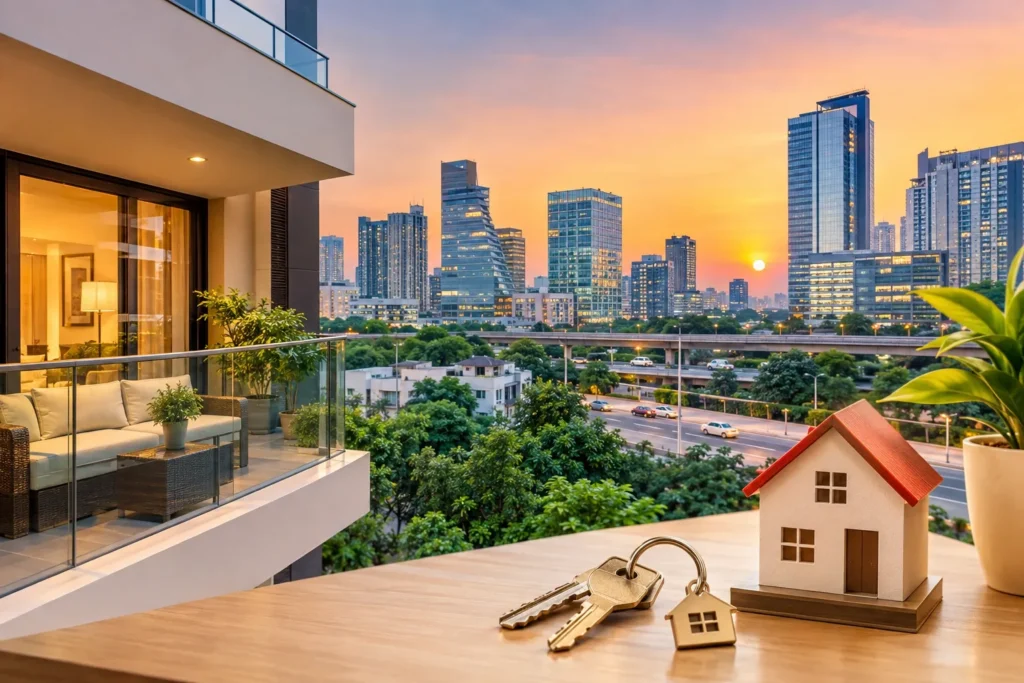
High-end apartments in Delhi

Uncategorized

Top Residential Properties for Sale in Delhi NCR: Best Locations to Invest

Delhi NCR continues to be one of India’s fastest-growing real estate markets, offering excellent opportunities for homebuyers and investors. The region includes Delhi, Gurugram, Noida, Greater Noida, Ghaziabad, and Faridabad, each providing a wide range of residential properties that suit different budgets and lifestyles. From luxury apartments and independent villas to affordable homes and gated communities, Delhi NCR has become a preferred destination for those looking to invest in quality real estate. At Namastey Homes, we help buyers find the best residential properties for sale in Delhi NCR through expert guidance, market knowledge, and personalized property solutions. Whether you are purchasing your first home or expanding your investment portfolio, choosing the right location is the key to long-term value. Find the perfect property in Delhi NCR with Namastey Homes. Expert guidance, verified listings, and the best investment opportunities.  Why Invest in Residential Property in Delhi NCR? Delhi NCR offers a strong combination of economic growth, world-class infrastructure, excellent connectivity, and continuous urban development. The region is home to major business hubs, multinational companies, educational institutions, healthcare facilities, and entertainment centers, making it an ideal place for both living and investing. With expanding metro networks, expressways, and smart city developments, residential property values continue to appreciate. This makes Delhi NCR an attractive destination for buyers seeking both comfortable living and long-term financial returns. Gurugram – Premium Living and High Investment Returns Gurugram has established itself as one of India’s leading real estate destinations. The city attracts professionals, entrepreneurs, and multinational companies, creating strong demand for residential properties. Areas such as Golf Course Road, Golf Course Extension Road, Sohna Road, New Gurgaon, and Dwarka Expressway offer premium apartments, luxury villas, and gated communities. Excellent infrastructure, business districts, international schools, and modern lifestyle amenities make Gurugram one of the best places to invest in residential property. South Delhi – Luxury and Prestige South Delhi remains one of the most prestigious residential locations in the country. Areas such as Saket, Greater Kailash, Defence Colony, Vasant Kunj, and Hauz Khas are known for their premium homes, independent floors, and luxury apartments. Residents enjoy excellent connectivity, reputed schools, hospitals, shopping malls, and green surroundings. Properties in South Delhi continue to maintain high market value due to limited availability and consistent demand from premium buyers. Noida – Modern Infrastructure and Affordable Luxury Noida has become a preferred destination for families and investors because of its planned infrastructure and excellent connectivity. Sectors along the Noida Expressway and central Noida offer modern apartments with world-class amenities at competitive prices. The city’s IT parks, educational institutions, healthcare facilities, and expanding metro connectivity continue to drive residential demand. Buyers looking for quality homes with future appreciation often consider Noida an excellent investment option. Greater Noida – A Growing Investment Hub Greater Noida is attracting homebuyers due to its spacious developments, affordable pricing, and improving infrastructure. The region offers well-planned residential projects, green surroundings, and excellent connectivity through major expressways. Upcoming commercial developments and improved transportation are expected to increase property values in the coming years, making Greater Noida an attractive destination for long-term investors. Faridabad – Affordable Homes with Strong Connectivity Faridabad has experienced significant infrastructure growth over the past few years. Improved metro connectivity and better road networks have made the city increasingly attractive for homebuyers. The availability of affordable apartments, independent houses, and gated communities makes Faridabad suitable for families seeking quality housing at competitive prices while remaining connected to Delhi and Gurugram. Key Factors to Consider Before Buying Property Before purchasing a residential property, buyers should carefully evaluate the location, builder reputation, legal approvals, connectivity, amenities, future infrastructure projects, and resale potential. It is equally important to understand your budget, financing options, and long-term objectives. Working with experienced real estate professionals helps simplify the buying process and ensures that every investment decision is well-informed. Why Choose Namastey Homes? Namastey Homes is a trusted real estate partner offering professional guidance for residential property buyers across Delhi NCR. We understand that every buyer has unique requirements, whether purchasing a family home, luxury residence, or investment property. Our team provides personalized property recommendations, market insights, transparent consultations, and complete assistance throughout the buying journey. From property selection to final documentation, we are committed to making your home-buying experience smooth, secure, and rewarding. Looking for top residential properties for sale in Delhi NCR? Get in Touch with Namastey Homes Today.    Frequently Asked Questions 1. Which is the best location to buy residential property in Delhi NCR? Gurugram, South Delhi, Noida, Greater Noida, and Faridabad are among the top residential markets, depending on your budget, lifestyle, and investment goals. 2. Is Delhi NCR a good place for property investment? Yes. Delhi NCR offers strong infrastructure, growing employment opportunities, excellent connectivity, and long-term property appreciation, making it one of India’s top real estate markets. 3. Which city offers the highest investment potential? Gurugram and Noida are considered high-growth markets due to rapid commercial development, strong rental demand, and ongoing infrastructure projects. 4. What type of residential properties are available in Delhi NCR? Buyers can choose from apartments, independent houses, villas, builder floors, luxury residences, gated communities, and affordable housing projects. 5. What should I check before buying a property? Verify legal approvals, ownership documents, builder credibility, project amenities, location, connectivity, and future development plans before making a purchase. 6. Is residential property a good long-term investment? Yes. Residential properties in prime Delhi NCR locations generally provide stable appreciation, rental income opportunities, and long-term wealth creation. 7. Why choose Namastey Homes? Namastey Homes offers expert real estate guidance, verified property listings, personalized recommendations, transparent services, and end-to-end support to help buyers find the best residential properties for sale in Delhi NCR.

Uncategorized

Ultimate Guide to Buying Property in Delhi NCR in 2026

Delhi NCR continues to be one of India’s most attractive real estate markets, offering excellent opportunities for homebuyers and investors. With ongoing infrastructure development, expanding business hubs, improved connectivity, and growing demand for residential and commercial properties, 2026 presents a promising time to invest in real estate. Whether you are purchasing your first home, upgrading your lifestyle, or building an investment portfolio, understanding the property market is essential for making informed decisions. At Namastey Homes, we help buyers navigate the real estate market with confidence by providing expert guidance, quality property options, and professional support throughout the buying process. Looking for Premium Service Apartments in Delhi NCR? Get in Touch with Namastey Homes Today. Why Invest in Delhi NCR in 2026? Delhi NCR remains one of the fastest-growing real estate regions in India. The area benefits from strong economic growth, expanding employment opportunities, modern infrastructure projects, and increasing demand for quality housing. Developments such as metro expansions, expressways, smart city initiatives, and commercial growth continue to drive property appreciation across the region. Investing in Delhi NCR in 2026 offers buyers the opportunity to benefit from long-term capital growth while enjoying access to world-class amenities and urban conveniences. Identify Your Property Goals Before beginning your property search, it is important to clearly define your objectives. Some buyers are looking for a permanent residence, while others are interested in rental income or long-term investment opportunities. Understanding your budget, preferred location, property type, and future requirements helps narrow down available options and simplifies the decision-making process. Namastey Homes assists buyers in identifying properties that align with their personal and financial goals. Choose the Right Location Location remains one of the most important factors when purchasing property. Different areas within Delhi NCR offer unique advantages depending on lifestyle needs, investment objectives, and accessibility requirements. Locations such as Gurugram, Noida, Greater Noida, South Delhi, Dwarka Expressway, and Sohna Road continue to attract significant buyer interest due to their connectivity, infrastructure, and development potential. Selecting the right location can significantly influence future property value and quality of life. Understand Your Budget and Financing Options A well-planned budget is essential when buying property. In addition to the property’s purchase price, buyers should consider registration fees, stamp duty, maintenance charges, taxes, and other associated costs. Many financial institutions offer home loan options with flexible repayment terms. Comparing loan offers, interest rates, and eligibility criteria can help buyers secure favorable financing. Namastey Homes provides guidance throughout the budgeting and financing process to ensure a smooth transaction. Verify Legal Documentation Legal verification is one of the most critical steps in property purchasing. Buyers should carefully review ownership documents, title deeds, approvals, occupancy certificates, RERA registration, and any applicable permissions before finalizing a purchase. Conducting proper due diligence helps prevent future disputes and ensures that the investment is secure. Working with trusted real estate professionals can simplify this process and provide additional peace of mind. Evaluate Builder Reputation When purchasing under-construction or newly launched properties, the developer’s reputation plays a major role in project quality and timely delivery. Buyers should research the builder’s track record, completed projects, customer reviews, and market credibility. Established developers often offer greater reliability, better construction quality, and stronger after-sales support. Namastey Homes assists clients in identifying trusted projects developed by reputable builders. Consider Future Growth Potential Property investment should always be evaluated from a long-term perspective. Areas experiencing infrastructure development, commercial expansion, and increasing population growth often deliver stronger appreciation over time. Projects located near metro corridors, business districts, educational institutions, and healthcare facilities generally attract higher demand and rental yields. Understanding future development plans can help maximize investment returns. Why Choose Namastey Homes? Namastey Homes is committed to helping buyers make informed real estate decisions in Delhi NCR. Our team provides expert market insights, personalized property recommendations, transparent guidance, and end-to-end support throughout the purchasing journey. Whether you are buying a residential apartment, investment property, luxury home, or commercial asset, we focus on understanding your requirements and identifying the most suitable opportunities. Our dedication to customer satisfaction, professional expertise, and market knowledge makes us a trusted real estate partner. Frequently Asked Questions 1. Is 2026 a good time to buy property in Delhi NCR? Yes. With ongoing infrastructure projects, increasing demand, expanding business hubs, and strong economic growth, 2026 offers promising opportunities for both homebuyers and investors. 2. Which areas are best for property investment in Delhi NCR? Popular investment destinations include Gurugram, Noida, Greater Noida, South Delhi, Dwarka Expressway, Sohna Road, and emerging growth corridors with strong infrastructure development. 3. What documents should I verify before buying property? Buyers should verify title deeds, ownership records, RERA registration, occupancy certificates, approvals, property tax records, and all relevant legal documentation. 4. How much down payment is usually required? Most home loans require a down payment ranging from 10% to 25% of the property’s value, depending on the lender and buyer profile. 5. Why is location important when buying property? Location affects property value, lifestyle convenience, connectivity, rental demand, and future appreciation potential. Choosing the right location is essential for long-term returns. 6. Can Namastey Homes help with property selection? Yes. Namastey Homes provides professional guidance, market insights, property recommendations, and complete support throughout the buying process. 7. What should first-time homebuyers consider? First-time buyers should focus on budget planning, location selection, legal verification, financing options, builder reputation, and future growth potential before making a purchase. Purchasing property is one of the most important financial decisions you will make. With proper planning, market knowledge, and expert guidance from Namastey Homes, buyers can confidently navigate the Delhi NCR real estate market and find opportunities that match their goals and aspirations. Find the perfect property in Delhi NCR with Namastey Homes. Expert guidance, verified listings, and the best investment opportunities.

Uncategorized

Exclusive Properties for sale : Your Complete guide for Luxury Real Estate

Finding exclusive properties for sale is not just about buying a home — it is about securing a lifestyle, an investment, and a legacy. Whether you are a seasoned buyer or entering the luxury market for the first time, this guide walks you through everything you need to know. +12% Luxury market growth in 2024 $3M+ Average premium property value 68% Buyers prefer off-market listings What Makes a Property Truly “Exclusive”? Not every high-priced home deserves the label “exclusive.” When real estate professionals and discerning buyers talk about exclusive properties for sale, they refer to a very specific class of homes that stand apart from the typical market. These are residences that combine extraordinary architecture, irreplaceable locations, and bespoke craftsmanship in ways that simply cannot be replicated. Think private beachfront estates in the Maldives, heritage townhouses in Mayfair, vineyard villas in Tuscany, or sky-high penthouses overlooking the Dubai skyline. What they share is not just a price tag — it is a sense of rarity. True luxury homes occupy a unique position: they are at once personal retreats and enduring assets that appreciate over time. Exclusive properties are not defined by size alone. They are defined by what cannot be easily found anywhere else — the view, the provenance, the privacy, and the story the home tells. Top Locations for Exclusive Properties in 2025 Location remains the single most important factor in luxury real estate. The best exclusive properties for sale in 2025 are clustered in markets that blend lifestyle appeal with long-term investment value. Here are the destinations topping buyer wish lists this year: How to Find Exclusive Properties for Sale Unlike standard real estate, the best luxury homes rarely appear on public listing portals. Many of the finest exclusive properties for sale are transacted off-market, meaning they are only accessible to buyers who have the right relationships or the right agent on their side. Work with a specialist luxury real estate agent This cannot be overstated. A specialist agent who operates within exclusive networks has access to properties that simply never reach the open market. They understand the nuances of negotiating with high-net-worth sellers, and they know how to structure deals in complex, multi-jurisdictional situations. If you are serious about buying premium real estate, your agent is your most valuable asset. Leverage private networks and events Art fairs, private members’ clubs, and high-end lifestyle events are often where luxury property introductions happen organically. Building genuine relationships in these circles can open doors that no online search portal ever will. Quick Buyer Tips for Exclusive Listings Investing in Exclusive Properties: What to Consider Buying an exclusive property is as much a financial decision as a personal one. The luxury real estate market behaves differently from the broader housing market — it is less volatile in downturns, but also slower to respond during general market upswings. That makes premium properties an attractive hedge for investors who prioritize capital preservation alongside lifestyle benefits. Before committing, think carefully about rental yield potential, local tax obligations for non-resident owners, and the liquidity of the specific market you are entering. A penthouse in a high-demand urban hub will always be easier to exit than a remote countryside estate, no matter how spectacular the latter may be. Also consider whether you want a fully managed property — many exclusive developments now offer concierge and property management services that allow absentee owners to generate rental income while maintaining the home to an impeccable standard. ✦ The Future of Luxury Real Estate The market for exclusive properties for sale is evolving rapidly. Sustainability is no longer a bonus feature — it is an expectation. Buyers in 2025 demand energy-efficient systems, sustainable materials, and smart-home technology as standard. Developers who do not deliver on these fronts are finding it increasingly difficult to command top-tier prices. Wellness-integrated design is another rising trend, with dedicated spa spaces, biophilic interiors, and air-purification systems becoming fixtures in premium listings. The definition of luxury is broadening to include mental and physical wellbeing, not just material opulence. Ultimately, the finest exclusive properties for sale in 2025 are those that anticipate the needs of tomorrow’s buyer today — homes that are as intelligent and sustainable as they are beautiful.

Uncategorized

Luxury Properties for Sale: Your Complete Guide to Finding the Perfect High-End Home

What Defines a Luxury Property Today? When most people hear the phrase luxury properties for sale, they picture sprawling mansions with infinity pools or glass-walled penthouses overlooking a city skyline. And while those images aren’t wrong, the definition of luxury real estate has evolved significantly over the past decade. Today, luxury isn’t just about size. It’s about exclusivity, location, architectural design, and the kind of craftsmanship that you simply can’t find in a standard home. High-end properties for sale typically include premium finishes, smart home technology, private amenities, and access to elite neighborhoods — all of which contribute to a lifestyle that’s both comfortable and aspirational. In most major markets, luxury properties are generally priced in the top 5–10% of all listings. In cities like New York, London, Dubai, or Mumbai, that threshold can start at $2 million and climb well into the tens of millions. But in smaller, emerging markets, a luxury home might begin at $500,000 — and still offer an experience that rivals anything in a global city. Why the Luxury Real Estate Market Is Booming Right Now The global market for luxury homes for sale has shown remarkable resilience over the past few years. Even during periods of economic uncertainty, high-net-worth buyers have continued to invest in premium real estate — and for good reason. Real estate, particularly at the luxury end, has long been considered one of the most stable stores of wealth. Unlike stocks or cryptocurrency, a beautifully located luxury property offers both tangible value and an enjoyable asset you can actually live in. Many buyers also see international luxury real estate as a way to diversify their portfolio across different currencies and economies. There’s also a lifestyle factor that pure numbers don’t capture. Post-pandemic, buyers have prioritized space, privacy, and quality of life in a way that’s unprecedented. Remote work has untethered many high earners from city centers, opening up demand for luxury properties in coastal towns, mountain retreats, and resort communities that were once considered secondary markets. Top Locations for Luxury Properties for Sale If you’re exploring luxury real estate for sale, geography matters enormously. The right location not only shapes your daily experience but also determines the long-term appreciation potential of your investment. Dubai, UAE — Dubai continues to attract global buyers with its zero income tax environment, world-class infrastructure, and stunning waterfront developments. Properties on the Palm Jumeirah or in Downtown Dubai consistently rank among the most sought-after in the world. The French Riviera — Cannes, Nice, and Cap d’Antibes offer timeless European elegance with Mediterranean views. Luxury villas for sale in this region blend old-world architecture with contemporary interiors. Miami, Florida — Miami’s ultra-luxury condo market has exploded in recent years, with buyers from Latin America, Europe, and Asia all competing for prime waterfront listings. The combination of year-round sunshine, cultural vibrancy, and no state income tax makes it a perennial favorite. Goa & Alibaug, India — Closer to home, India’s luxury property market is gaining serious momentum. High-net-worth Indian buyers are increasingly investing in premium villas and second homes in coastal destinations like Goa and Alibaug, where privacy, nature, and modern design intersect beautifully. Tuscany, Italy — For those dreaming of olive groves, vineyards, and hilltop stone farmhouses, Tuscany remains one of Europe’s most beloved luxury property destinations. What to Look for When Buying a Luxury Property Buying a premium property for sale involves a different set of considerations than a typical home purchase. Here’s what experienced luxury buyers focus on: Location and privacy — In luxury real estate, the best addresses are rarely advertised loudly. Gated communities, private estates, and off-market listings often represent the finest opportunities. Work with a specialist agent who has access to exclusive inventory. Build quality and materials — Look beyond the staging and marketing photos. Examine the quality of construction, the provenance of materials, and the reputation of the developer or architect. Genuine luxury is in the details — Italian marble, hand-crafted joinery, custom steel windows, and smart home systems that actually work seamlessly. Amenities and services — The best luxury properties go beyond the home itself. Think concierge services, private gyms, wine cellars, home theaters, rooftop terraces, helipads, and proximity to private schools, fine dining, and cultural institutions. Resale potential — Even if you’re buying your forever home, it’s wise to think like an investor. Properties in globally recognized luxury corridors tend to hold value better and attract buyers faster if you ever choose to sell. Working with a Luxury Real Estate Agent One of the most important steps in finding exclusive properties for sale is choosing the right real estate partner. Luxury transactions are complex, often involving legal structures, international transfers, trust arrangements, and significant negotiation. A great luxury agent brings far more than a portfolio of listings. They offer market intelligence, discretion, and a network of relationships — with other agents, developers, legal advisors, and financial planners — that can make the difference between a good deal and an exceptional one. Ask any potential agent about their recent transactions in your target market, their marketing approach for sellers, and their experience handling the specific property type you’re looking for, whether that’s a penthouse, a private estate, or a branded residences project. Searching for luxury properties for sale is ultimately about more than an address or an asset class. It’s about creating a life that reflects your values, your aesthetic, and your sense of what home truly means. Whether you’re looking for a sun-drenched villa overlooking the sea, a sleek urban penthouse with skyline views, or a quiet countryside estate where life moves at your own pace — the perfect luxury property is out there waiting. Take your time, do your research, partner with the right experts, and don’t settle for anything less than extraordinary. Because in luxury real estate, as in life, the details make all the difference.

Uncategorized

South Delhi Property in 2026: Is It Still Worth the Investment?

If you’ve ever driven through Hauz Khas on a quiet Sunday morning or walked past the tree-lined streets of Defence Colony, you already know why South Delhi holds a special place in the hearts of homebuyers and investors alike. There’s something timeless about this part of the city — the old money, the wide roads, the proximity to everything that matters.south delhi property Let’s break it down — honestly, practically, and without the usual real estate jargon. What’s Happening in the South Delhi Property Market Right Now? The South Delhi real estate market in 2026 is doing something that not many predicted a few years ago — it’s growing steadily and showing no signs of cooling off. The current average asking price for properties in South Delhi sits at approximately ₹24,774 per sq ft, reflecting a market that continues to appreciate across most localities. In fact, premium zones in South Delhi have seen 25–40% appreciation over the last three years, making it one of the stronger-performing residential belts in the entire Delhi NCR region. What’s fueling this? A mix of things: genuine end-user demand (not speculative buying), improving infrastructure, limited new supply in established neighbourhoods, and growing interest from NRI buyers who want a solid address in the capital. South Delhi Property Prices: Locality-Wise Breakdown Here’s the thing — South Delhi isn’t one market. It’s several micro-markets with very different price points, and knowing where to look can save you — or make you — a significant amount of money. Premium Tier: ₹13,000–₹40,000+ per sq ft Areas like Greater Kailash, Defence Colony, Vasant Vihar, Green Park, and Vasant Kunj fall into the premium bracket. Vasant Vihar, for instance, has average flat rates hovering around ₹38,900 per sq ft, with 3 BHK units ranging from ₹3.8 crore upward. These aren’t just homes — they’re legacy assets. Golf Links and Moti Bagh continue to attract ultra-HNI buyers and remain among the most aspirational addresses in Delhi. Mid-Segment: ₹9,000–₹13,000 per sq ft Good metro access, established social infrastructure, and reasonable appreciation make these areas consistently popular. Affordable Entry Points: Under ₹9,000 per sq ft Yes, affordable South Delhi exists. Areas like Chattarpur, Neb Sarai, Ghitorni, and Rajpur Khurd offer properties under ₹9,000 per sq ft — making them attractive for first-time buyers or investors looking at long-term rental yield. Rental Returns: Where South Delhi Shines Some localities are delivering impressive rental yields that often outperform newer, shinier NCR corridors. Maharani Bagh tops the rental return chart with approximately 30% rental appreciation, followed by South Extension 2 (20.4%), Malviya Nagar (15.5%), New Friends Colony (12.3%), and Hauz Khas (11.8%). These numbers aren’t just impressive on paper — they reflect genuine, sustained demand from students, young professionals, expats, and corporate tenants. Rental prices across South Delhi range from ₹8,000 to ₹90,000 per month, depending on the locality, configuration, and amenities. A well-maintained 2 BHK in Malviya Nagar or Saket, for instance, can comfortably fetch ₹35,000–₹55,000 a month in today’s market. Why Do People Keep Choosing South Delhi Property? This is the part no data can fully explain — but it’s real. You can’t replicate Defence Colony or Greater Kailash in a newly developed township. The social fabric, the neighbourhood feel, the access — it’s baked in. Beyond the intangibles, here are the practical reasons buyers keep coming back: What Experts Are Saying About Delhi Property in 2026 Industry analysts aren’t being overly cautious this year. According to a Reuters poll of property analysts conducted earlier in 2026, home prices in major urban centres including Delhi-NCR are projected to rise 5–7% annually over the next three years. That’s not a bubble — it’s sustained, organic appreciation. Should You Buy, Rent, or Wait? Here’s an honest take: South Delhi property rarely sees sharp corrections, and every quarter you delay means paying more. Whether it’s a 2 BHK in Saket or a builder floor in Malviya Nagar, the fundamentals are solid. If you’re buying to invest — focus on rental yield localities. Hauz Khas, South Extension, and Maharani Bagh offer strong returns without relying purely on price appreciation. If you’re renting — South Delhi remains one of the best places in Delhi to rent because of its connectivity, safety, and community vibe. Prices are rising, but so is the quality of available inventory. Buying a home in South Delhi isn’t just a financial decision — it’s a lifestyle choice. The streets, the markets, the parks, the sense of history layered into every block — these things genuinely matter when you’re choosing where to put down roots or where to park serious capital.

Uncategorized

How to Buy a Home in Delhi: Your Complete, No-Nonsense Guide for 2025

Dreaming of owning a home in India’s bustling capital? Whether you’re a first-time buyer or upgrading to something bigger, buying a home in Delhi is one of the most significant decisions you’ll ever make — and one that rewards those who do their homework. Delhi’s real estate market is dynamic, diverse, and full of opportunity. From plush South Delhi colonies to emerging micro-markets in Dwarka and Rohini, the city offers something for every budget and lifestyle. But navigating it without a clear plan can feel overwhelming. This guide walks you through everything — budgeting, localities, legal checks, home loans, and more — so you can buy your home in Delhi with confidence. Why Buy a Home in Delhi in 2025? Delhi remains one of the most sought-after real estate destinations in India. Here’s why 2025 might be the right time to invest: 8–12% Annual property appreciation in prime zones ₹8.5% Home loan interest rate (average, 2025) 3,200+ RERA-registered projects in Delhi NCR Infrastructure upgrades — new metro corridors, the Dwarka Expressway, and the Delhi-Meerut RRTS — are reshaping which neighbourhoods are worth watching. Property values in well-connected areas have consistently outperformed broader market trends. If you’ve been sitting on the fence, market conditions in 2025 offer a balanced window before the next major price correction. Step 1: Define Your Budget Before You Fall in Love with a House The single biggest mistake first-time homebuyers make in Delhi is starting the search before they know their numbers. Before you browse listings, pin down three figures: Additional costs — stamp duty (4–6%), registration fees, brokerage, interiors, and maintenance deposits Down payment — typically 10–20% of the property value Home loan eligibility — most banks sanction 80–85% of market value Use a home loan EMI calculator and factor in a comfortable buffer — your EMI should ideally not exceed 40% of your monthly take-home income. Once your budget is clear, every property search becomes sharper and your negotiations carry real weight. Step 2: Choose the Right Neighbourhood in Delhi Delhi is not one market — it’s dozens of micro-markets stitched together. The locality you pick will define your commute, lifestyle, resale potential, and daily quality of life. Here’s a quick snapshot of popular zones: South Delhi ₹1.2 Cr – ₹8 Cr+Premium Dwarka ₹60 L – ₹1.8 CrMid-range Rohini ₹50 L – ₹1.4 CrAffordable Janakpuri ₹70 L – ₹2 CrMid-range Vasant Kunj ₹90 L – ₹3 CrEstablished Shahdara ₹35 L – ₹80 LBudget Beyond price, evaluate the neighbourhood on: proximity to your workplace, school catchment areas, metro connectivity, flood history during monsoons, and future development plans. The Delhi Master Plan 2041 has earmarked several zones for transit-oriented development — buying near those corridors today could be a smart long-term move. Step 3: Resale Property vs New Construction — Which Is Right for You? Both options have strong cases in Delhi’s market. New construction or builder floor You get a modern layout, RERA protection, and often flexible payment plans tied to construction milestones. Builder floors in areas like Chattarpur, Sainik Farms, and Greater Kailash are hugely popular with buyers who want independent living without a society’s restrictions. The trade-off? Delivery risk and a 2–3 year wait before you can move in. Resale property Resale homes in Delhi often sit in better-established localities with mature infrastructure — parks, markets, schools — already in place. You can negotiate harder, get immediate possession, and inspect exactly what you’re buying. The downside is older construction, potential structural quirks, and more complex paperwork, especially in properties that have changed hands multiple times. Step 4: Legal Due Diligence — Don’t Skip This Delhi’s property market has its share of disputed titles, unauthorized constructions, and encroached land. Protecting yourself legally is non-negotiable. Here’s your due diligence checklist: Step 5: Securing Your Home Loan in Delhi With property prices in Delhi, most buyers need a home loan. The good news is that competition among lenders — banks, HFCs, and NBFCs — keeps rates reasonably competitive. Here’s what to keep in mind: First-time homebuyers may also be eligible for benefits under the Pradhan Mantri Awas Yojana (PMAY) scheme, which offers a credit-linked subsidy on home loans depending on income category. Check your eligibility before applying. Step 6: Negotiate Smart and Close Confidently Once you’ve found the right home, passed legal checks, and arranged financing — it’s time to negotiate. In Delhi’s resale market, there’s almost always room to move. Sellers typically list 5–15% above their actual floor price. Do your research: check recent comparable sales in the same building or lane before making your offer. Once both parties agree on price, the typical closing sequence is: token advance → agreement to sell → home loan disbursement → stamp duty payment → registration at the sub-registrar office. The entire process from offer to registered ownership typically takes 30–60 days. Buying a home in Delhi is absolutely worth it — but only when you go in prepared. Nail down your budget, pick a locality that fits your life (not just your wishlist), do thorough legal due diligence, and don’t rush the loan process. Delhi rewards patient, informed buyers with property that holds value and grows with the city. Take your time, work with professionals you trust, and when that right property comes along — you’ll know it.

Uncategorized

The Real Estate Evolution of Delhi-NCR: Premiumization, Shortages, and Growth

The real estate landscape of Delhi-NCR is undergoing a structural evolution. Moving away from the speculative volatility of the post-pandemic boom, the market has transitioned into a highly disciplined, user-led phase characterized by a profound shift toward premiumization and infrastructure-driven growth. While core Delhi faces acute land scarcity, the broader National Capital Region (NCR) continues to register robust demand, defying national housing slowdowns with significant capital appreciation and resilient transaction volumes.property in delhi A comprehensive analysis of the Delhi real estate market requires evaluating three primary pillars: spatial constraints, infrastructural connectivity, and shifting consumer demographics. Balancing these factors involves intricate tradeoffs for urban planners, developers, and homebuyers alike. 1. The Core Scarcity vs. Peripheral Expansion Dichotomy The defining characteristic of real estate inside Delhi’s municipal borders is absolute land scarcity. The Rise of Ultra-Luxury Builder Floors To satisfy the demand for premium housing within traditional urban boundaries, the market has relied heavily on the “collaboration model. This structure optimizes land utilization while offering affluent buyers private infrastructure like dedicated elevators, automated security, and terrace gardens. However, this micro-market dynamics introduce severe pricing polarization. The Peripheral Counterweight Unable to find large, master-planned footprints within core Delhi, developer capital and consumer demand have migrated to peripheral economic corridors. Micro-markets across the National Capital Region have emerged as the primary volume engines. Areas such as Sector 150 along the Noida Expressway offer low-density, green-certified master plans that are physically impossible to replicate in central Delhi. Similarly, corridors like the Dwarka Expressway and the Southern Peripheral Road (SPR) in Gurugram capture a massive share of the regional luxury and upper-mid segment market.property in delhi 2. Infrastructure as the Primary Demand Catalyst In a macro-region as geographically vast as Delhi-NCR, connectivity dictates capital appreciation. Real estate values no longer track distance to the traditional city center; instead, they track proximity to multi-modal transit corridors. 3. Shifting Buyer Demographics and Premiumization The post-pandemic market has seen a profound shift in consumer psychology. The market reflects an unprecedented wave of premiumization. Nationally, residential segments priced above ₹1 crore dominate sales volumes. Homebuyers actively prioritize: 4. Strategic Market Tradeoffs Navigating the Delhi-NCR property market requires balancing competing priorities, where optimizing for one factor frequently compromises another.property in delhi Price vs. Scale and Amenities The starkest tradeoff lies between geographic prestige and physical scale. A buyer investing in core Delhi pays a massive location premium for a builder floor but inherits aging municipal networks, restricted community spaces, and limited scope for modern ecosystem amenities. Conversely, investing the same capital in the NCR periphery secures a significantly larger footprint within a modern, self-sustaining high-rise township featuring extensive sports, wellness, and lifestyle infrastructure—at the cost of longer commute times and higher density. Immediate Utility vs. Future Appreciation Under-construction projects near mega-infrastructure projects (like the Jewar Airport corridor or nascent expressway sectors) offer the highest potential capital appreciation. However, they carry construction delay risks and lack mature civic amenities like established hospitals, schools, and retail ecosystems. Moving into established micro-markets provides immediate quality of life and stable rental income but offers flatter, more defensive capital growth. 5. Structural Challenges in Urban Execution As the real estate sector advances, it faces critical structural bottlenecks that threaten the sustainability of its growth trajectory. The Civic Infrastructure Deficit A recurring challenge across emerging NCR micro-markets is the widening gap between rapid private residential construction and slow municipal infrastructure deployment. While luxury high-rises are completed on schedule, the local civic bodies often struggle to deploy last-mile road connectivity, robust sewage systems, and stable power grids. This asymmetry creates localized friction, where premium developments risk operating in isolation from adequate municipal services. Environmental and Resource Stress The rapid expansion of the built environment places immense strain on regional resources. Severe groundwater depletion across parts of Gurugram and Noida presents an existential challenge to long-term habitability. Furthermore, the region’s seasonal air quality crises and expanding concrete footprint require a rapid shift toward sustainable, green-certified construction methods. Developers face the complex task of integrating rainwater harvesting, zero-discharge waste management, and energy-efficient building skins without pricing their inventory out of the competitive mid-to-premium market.

Uncategorized

Delhi-NCR housing sales rise 30% in Q1 2026 amid premium demand boom

1. Structural Shifts: The Premiumization of Delhi-NCR A primary characteristic defining the contemporary Delhi real estate sector is the aggressive shift toward premiumization (Hazarika, 2026). property in delhi india Data from early 2026 shows that housing sales across Delhi-NCR surged by 30% year-on-year, defying broader national slowing trends, with premium residential inventory priced above ₹1 crore dominating a staggering 71% of total market absorption (Hazarika, 2026). 2. Micro-Market Dynamics and Property Types South Delhi and the Independent Builder Floor Paradigm Consequently, development has manifested primarily in the Ultra-Luxury Independent Builder Floor segment (Casa Consultancy Services, 2026). Capital values in these micro-markets reflect intense scarcity constraints: Locality MCD Category Avg. Price Range (per sq. ft.) Typical Configuration Golf Links / Jor Bagh Category A ₹60,000 – ₹1,00,000+ Luxury Bungalows / Independent Floors Vasant Vihar Category A ₹40,000 – ₹55,000 Ultra-Luxury Builder Floors (3BHK-5BHK) Defence Colony Category B ₹35,000 – ₹45,000 Modern 4BHK Builder Floors Greater Kailash II Category B ₹30,000 – ₹38,000 Premium Floors & Apartments Saket Category B/C ₹22,000 – ₹30,000 Gated Communities & Apartments Note: Ultra-luxury independent floors in the most exclusive Category-A pockets have seen single-unit transactional values scaling up to ₹55 crore, driven by high demand from institutional private equity funds, family offices, and foreign embassies seeking dollar-denominated rental yields (Casa Consultancy Services, 2026). Peripheral Expansion: High-Rises and Expressways Conversely, peripheral sectors such as Dwarka, along with extensions into neighboring Gurugram and Noida, are defined by high-density vertical growth (AIPL, 2026; Express Builders, 2026; Growmore Realtors, 2026).property in delhi india Micro-markets adjacent to mega-infrastructure projects—such as the operational Dwarka Expressway, Urban Extension Road-II (UER-II), and the Noida Expressway—have evolved into core destinations for institutional developer launches (AIPL, 2026; Cushman & Wakefield, 2026). 3. Infrastructure as the Primary Catalyst In the modern Delhi real estate ecosystem, transit-oriented development is no longer merely a secondary advantage; it acts as the baseline determinant of capital appreciation (Express Builders, 2026; Magicbricks, 2026). 4. Strategic Tradeoffs and Market Challenges The Density vs. Infrastructure Tradeoff Homebuyers face a fundamental structural tradeoff between location exclusivity and modern community infrastructure (Casa Consultancy Services, 2026; Magicbricks, 2026). Opting for an independent builder floor in Delhi’s urban core provides unparalleled status, central access, and land share ownership (Casa Consultancy Services, 2026). Environmental and Regulatory Bottlenecks Real estate development within Delhi-NCR operates under highly constrained regulatory and environmental environments (IJCRT, 2026):property in delhi india

Uncategorized

Property in Delhi, India: The Ultimate Buyer’s & Investor’s Guide (2026)

Delhi, India’s bustling capital, has long been one of the country’s most coveted real estate destinations. Whether you’re a first-time homebuyer, a seasoned investor, or an NRI looking to plant roots in India’s heartland, property in Delhi offers a compelling mix of connectivity, culture, and long-term capital growth. If you’re navigating the Delhi real estate market in 2026, this comprehensive guide will walk you through everything you need to know. Why Invest in Property in Delhi? Delhi is more than a political capital — it’s an economic powerhouse. Home to millions of professionals, students, diplomats, and entrepreneurs, the city generates consistent demand for both residential and commercial real estate. The Delhi Metro network, one of the largest in Asia, connects the city’s key zones to the wider NCR region, making commuting seamless and real estate in well-connected localities particularly attractive. From an investment standpoint, the numbers speak for themselves. Delhi-NCR recorded a remarkable 30% year-on-year surge in housing sales in Q1 2026, with 10,740 units sold — up sharply from 8,290 units in the same period last year. New project launches also jumped by 64% year-on-year, with over 13,600 units introduced to the market in just the first quarter. Property values in Delhi-NCR grew at 12–15% annually, leading price appreciation among all major Indian cities. For rental investors, Delhi offers one of the highest gross rental yields in India at 5.81%, outperforming Mumbai (3.84%) and the national average of 5.09%. This makes Delhi a dual-benefit market — strong capital appreciation and reliable rental income. Delhi Real Estate Market Overview 2026 After years of rapid price escalation that strained buyer budgets, the Delhi-NCR residential market is entering a phase of relative stability in 2026, according to the CBRE India Residential Market Outlook 2026. Incomes are finally catching up to property prices, improving affordability for middle-class and salaried buyers. Premium areas can command anywhere from ₹30,000 to ₹65,000 per sq ft for plots and land, while mid-range residential localities typically range between ₹8,000 and ₹18,000 per sq ft. Residential property prices in well-connected zones continue to appreciate at 8–12% annually, while rental yields of 2–4% provide predictable passive income in established localities. The luxury and premium segment has been the biggest growth driver, with demand for larger, better-equipped homes climbing sharply. Simultaneously, areas on Delhi’s periphery and developing micro-markets are gaining traction from buyers priced out of central zones. Top Areas to Buy Property in Delhi Choosing the right locality is the most critical decision in any real estate purchase. Here’s a look at Delhi’s most sought-after residential zones in 2026: South Delhi — Premium Living, Enduring Value South Delhi remains the most aspirational real estate address in the city. Localities such as Greater Kailash, Vasant Kunj, Saket, Defence Colony, and Hauz Khas attract premium buyers, expats, and high-net-worth individuals. These areas offer excellent social infrastructure — upscale malls, top hospitals, reputed schools, and metro connectivity — backed by limited supply that keeps values elevated. New Friends Colony is particularly popular among diplomats and business professionals for its strong rental demand. Dwarka — Planned, Affordable, and Connected Dwarka is consistently ranked among the best residential areas in Delhi for middle-class families. Its well-planned sectors, proximity to IGI Airport, metro connectivity, and access to Gurgaon make it a practical yet aspirational address. Properties here appeal to professionals, families, and long-term investors looking for steady appreciation and rental returns. Rohini — North Delhi’s Organised Township Rohini, one of DDA’s largest residential developments, is a self-sufficient township with wide roads, parks, metro access via Rithala and Rohini West stations, and abundant social amenities. Property prices range from ₹8,000 to ₹9,500 per sq ft in well-established sectors, with rental yields of around 3.6% — the highest among DDA sectors in Delhi. It’s an excellent choice for first-time buyers and investors seeking stable rental income. Saket — Urban Comfort Meets Investment Potential Saket blends residential comfort with commercial vibrancy, featuring prominent malls like Select Citywalk, hospitals, and seamless metro access. Its growing demand from working professionals and dual residential-commercial investment potential make it one of the top localities to watch in 2026. Mayur Vihar — East Delhi’s Rising Star Served by both the Blue and Pink Metro lines, Mayur Vihar offers an affordable entry point into East Delhi with strong connectivity to Noida and central areas. DDA flats and independent builder floors remain popular with mid-term investors and tenants alike. Chattarpur — Emerging Investment Hotspot Located near Gurgaon and Faridabad, Chattarpur is undergoing rapid development with upcoming metro extensions and road upgrades. It offers larger plots and farmhouse-style properties at lower costs than South Delhi — an ideal pick for buyers seeking bigger homes without premium price tags. Types of Property Available in Delhi Delhi’s real estate landscape caters to every budget and lifestyle: Key Factors Driving Property Prices in Delhi Several factors shape property values across Delhi’s diverse micro-markets: Tips for Buying Property in Delhi Before signing on the dotted line, keep these practical tips in mind: Is 2026 a Good Time to Buy Property in Delhi? For long-term buyers and investors, 2026 represents a strategic entry window. Prices have appreciated significantly over the past five years, but the current phase of relative stability — with incomes catching up — offers a more balanced buying environment than the sharp escalation years of 2021–2024. Developing micro-markets like Chattarpur, Narela, and Dwarka Extension under the L-Zone offer future appreciation potential at accessible price points. Premium zones like Greater Kailash and Vasant Vihar continue to deliver long-term capital security backed by limited supply. For NRI investors in particular, analysts suggest 2026 may be precisely the right moment — after significant past growth but ahead of the next likely appreciation cycle driven by infrastructure completions in 2027–2028.

Uncategorized

Delhi India Houses: Your Complete Guide to Finding the Perfect Home in India’s Capital

Introduction: Why Delhi’s Housing Market Stands Apart Delhi, the beating heart of India, is one of the most dynamic real estate markets in Asia. Whether you are a first-time homebuyer, a seasoned investor, or a family relocating to the National Capital Region (NCR), understanding Delhi India houses is essential before making one of the biggest financial decisions of your life. From centuries-old havelis in Chandni Chowk to ultra-modern high-rise apartments in Dwarka and Rohini, Delhi’s housing landscape is staggeringly diverse. The city blends the historic with the contemporary, the affordable with the luxurious — offering something for every budget, lifestyle, and aspiration. This guide covers everything you need to know: popular neighbourhoods, types of houses in Delhi, average property prices, buying versus renting considerations, and expert tips to navigate the market with confidence. Types of Houses in Delhi Delhi offers a rich variety of residential property types, each suited to a different way of living. 1. Independent Houses and Bungalows Independent houses remain the most coveted form of residential real estate in Delhi. Found predominantly in South Delhi localities like Vasant Vihar, Defence Colony, and Greater Kailash, these properties offer privacy, space, and the freedom to renovate or expand. Bungalows in prime South Delhi localities can range from ₹5 crore to over ₹100 crore, depending on plot size and location. 2. Builder Floor Apartments Builder floors are a distinctly Delhi phenomenon. Property owners construct multi-storey buildings on their plots and sell individual floors independently. This gives buyers the feel of an independent house at a relatively lower cost. Areas like Pitampura, Janakpuri, and Paschim Vihar are known for quality builder floor options ranging from ₹80 lakh to ₹3 crore. 3. DDA Flats The Delhi Development Authority (DDA) regularly launches housing schemes that offer affordable apartments across various income groups. DDA flats are popular among middle-class families and government employees, with options available in Dwarka, Rohini, Narela, and Jasola. Prices typically range from ₹20 lakh to ₹90 lakh under various housing schemes. 4. Group Housing Society Apartments Modern gated communities with shared amenities like swimming pools, gyms, parks, and 24/7 security have become increasingly popular in Delhi. Areas like Vasant Kunj, Saket, and Dwarka Sector 6–23 feature numerous society apartments that appeal to young professionals and nuclear families. 5. Havelis and Heritage Homes For those drawn to history and character, Delhi’s old quarters — particularly Shahjahanabad (Old Delhi) — are home to traditional havelis with courtyards, carved wooden facades, and architectural grandeur that modern constructions simply cannot replicate. Top Neighbourhoods to Buy Houses in Delhi South Delhi South Delhi is the most prestigious residential belt in the city. Localities like Defence Colony, Hauz Khas, Safdarjung Enclave, and Malviya Nagar are perennial favourites for affluent families and expats. Excellent schools, hospitals, restaurants, and connectivity via the Delhi Metro make this zone highly desirable — and highly priced. West Delhi West Delhi — encompassing Rajouri Garden, Janakpuri, Uttam Nagar, and Paschim Vihar — offers excellent value for money. It is well-connected via the Blue and Green Metro lines, making it a smart choice for working professionals. Average property prices here are 30–40% lower than South Delhi, without compromising significantly on infrastructure or lifestyle. North Delhi Localities like Rohini, Pitampura, and Model Town in North Delhi are dense, well-established residential areas. Rohini, one of Asia’s largest planned colonies, offers affordable housing with excellent metro connectivity. It is ideal for families seeking spacious homes without the premium price tag of South Delhi. Dwarka Dwarka has emerged as one of Delhi’s most well-planned sub-cities. Wide roads, green parks, good schools, and proximity to Indira Gandhi International Airport make it a top pick for IT professionals, airline staff, and young families. Dwarka also offers competitive property rates compared to South Delhi. East Delhi Neighbourhoods such as Laxmi Nagar, Preet Vihar, and Mayur Vihar offer affordable housing options and strong connectivity to Noida and Central Delhi. East Delhi is particularly popular among budget-conscious buyers looking for spacious builder floors at accessible price points. Delhi House Prices: What to Expect in 2024–2025 Property prices in Delhi vary enormously based on location, property type, and amenities. Here is a general overview: Area Approximate Price Range (per sq. ft.) South Delhi (prime) ₹20,000 – ₹60,000+ Dwarka ₹8,000 – ₹14,000 Rohini / Pitampura ₹7,000 – ₹12,000 West Delhi ₹8,000 – ₹15,000 East Delhi ₹6,000 – ₹11,000 Old Delhi ₹5,000 – ₹10,000 Prices have seen consistent appreciation in Delhi over the past decade, driven by infrastructure growth, metro expansion, and limited land availability within city limits. Buying vs. Renting a House in Delhi Buy if: You are planning to stay in Delhi for five or more years, have a stable income, and want to build long-term equity. With home loan interest rates stabilising and the government offering tax deductions under Sections 24(b) and 80C, homeownership is increasingly attractive. Rent if: You are new to the city, working on a short-term contract, or still exploring which neighbourhood suits your lifestyle. Rental yields in Delhi range from 2% to 4% annually, which means renting can be cost-effective in the short term. Key Tips for Buying a House in Delhi

Reset password

Enter your email address and we will send you a link to change your password.

Get started with your account

to save your favourite homes and more

Sign up with email

Get started with your account

to save your favourite homes and more

By clicking the «SIGN UP» button you agree to the Terms of Use and Privacy Policy
Powered by Estatik
Scroll to Top